Free Inquiry Blog Post #3: Missing Days, Overcoming Guilt, and Habit Building

Photo credits: Towfiqu barbhuiya on Unsplash
It is only the second week into this free inquiry project, and I missed a day of journaling. Actually, I missed a couple of days this week to be fully honest. This was actually quite discouraging for me as this exact same thing has happened before when I have tried journaling on previous occasions. I get caught up in the busy school grind and just forget to write or allow the journal to be put on the backburner. Once again, I quickly fell into the familiar mindset where if I wasn’t writing something in the journal every single day, the entire project was an epic fail. On previous occasions, missing a couple of days would have been enough for me to move on from journaling altogether.
The difference between this time and the previous times I’ve attempted to consistently journal is that I wasn’t tied down by the confines of doing an assignment on it. With that being said, instead of shoving the journal into my desk drawer where it wouldn’t be seen of or heard from until the next time I brought it out to try consistent journaling, I reflected on what actually happened and why I didn’t write anything those days. After doing so, I realized that it was a Tuesday and a Thursday, where I’m in class from basically 8:00 am to 4:00 pm. Once I get home on those days, I go straight to working on assignments to make up for lost time. These two days are usually the most busy and stressful days of the week for me. While these days might have been the days where I needed to write a journal entry the most to allow my stress or anxieties to roll off the pen onto paper, they are also the easiest days to not write in the journal. Missing writing those days did not mean failure, they just meant that life had taken over, which is going to happen to everyone from time to time.
This new realization allowed me to readjust my goals. Rather than expecting myself to journal every single day, which for a busy student like myself might be putting unrealistic expectations on myself and setting myself up for disappointment, I changed my goal to journalling most days. If I miss a day due to the busyness of school, then so be it. Reflection can still happen in a flexible way. This slight shift removed a lot of the pressure or demand associated with the process, and made it feel more supportive.
Ways to get back into writing after you have missed days
The key to missing days is getting back into it. Bullet Journal offers four different strategies to ditch guilt and begin writing after missing days, which I found incredibly useful. These ways include:
- Start with Today: Reconnect with the present moment by turning to the next blank page and writing down what you want to create today and what matters to you right now. Simply focus on doing a daily log to build momentum.
- Rapid Summary: If you want to fill in the gaps, take a single page and list the notable moments of the time gone by. It’s a quick way to catch up without the burden of detailed entries.
- Weekly Reflection Summary: You can also use your Weekly Reflection for a rapid summary of missed days. This method helps maintain continuity without overwhelming you. These summaries are a great way to capture some of the lessons and insights from the gaps while relieving you of the pressure to have a “perfect log.”
- Refine and simplify: If you find yourself consistently missing days, it might be a sign that your practice needs to adapt. Maybe your current method is too time-intensive so you simplify your approach to just the Daily Log. Or perhaps evenings are too hectic so you try logging in the morning.
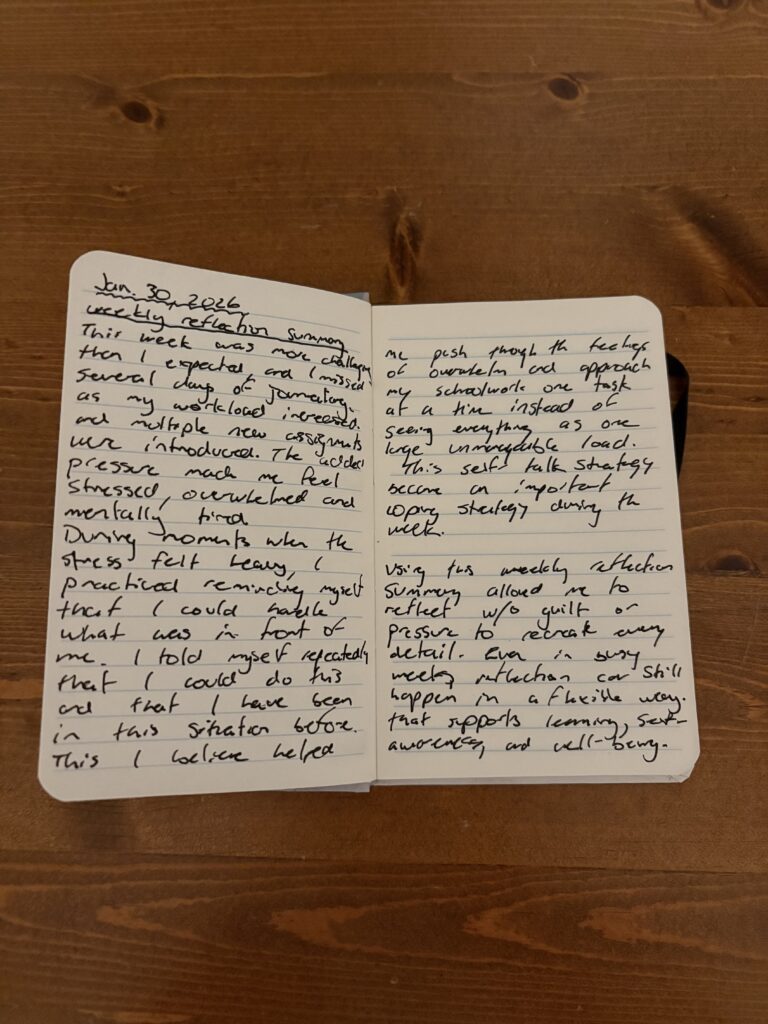
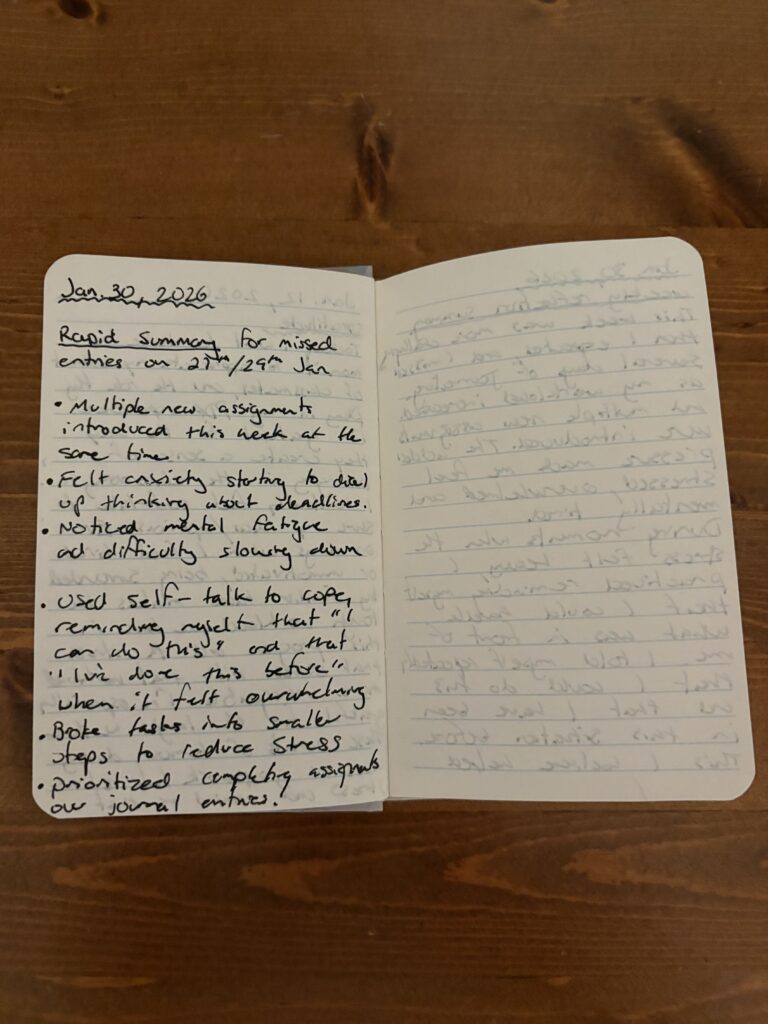
Journal entries using the rapid summary and weekly reflection summary format after missing two days of journaling
The timeline of habit building
Coming into this assignment, I had no idea how long it actually took to build a habit. According to Dr. Gina Cleo, habit formation takes anywhere from 18 to 254 days, depending on the complexity of the habit and the person. For example, a simple habit might take anywhere from 18-30 days to form, while more complex habits can take anywhere from 91-254 days to form. A powerful quote from this article that is relevant to this assignment would be if you’ve been at it for a few weeks and haven’t nailed it yet, don’t give up. You’re probably still right on track.
Overcoming guilt
The most important lesson learned during this week was recognizing how guilt can interfere with habit building. Feeling guilty definitely didn’t help my motivation to practice consistently journaling. It actually made it more challenging to start again after missing a day or two when life got busy. My thought process was originally that if I was missing days, then I might as well not journal at all. Once I let go of the unnecessary guilt, and accepted inconsistency as part of the learning process, it became much easier to return to journaling. I wish I had of known that the previous attempts I made at journaling.
Sources:
Bullet Journal. (2024 August 21). The Guilt of Missing Days. https://bulletjournal.com/blogs/bulletjournalist/the-guilt-of-missing-days?srsltid=AfmBOopRaIhksouzofg8HLYUOKq6zyI7g3E98cVsKWom-KABrAzBDqSR
Cleo, G. (2025 May 23). Why Most Habits Fail – and How to Make Yours Stick for Good. https://www.drginacleo.com/post/why-most-habits-fail-and-how-to-make-yours-stick-for-good