Free Inquiry Blog Post #4: Using Prompts to End Writer’s Block

Photo credits: Steve Johnson on Unsplash
Now that I have been journaling for several weeks, days where I feel like I have nothing to write have begun popping up. While journaling is supposed to be a positive experience, I have to admit that the blank page has become frustrating and an obstacle to consistent reflections. In my previous attempts at journaling, staring at a blank page definitely led me to take a break from reflecting, which in turn would lead to me abandoning it altogether over time. This time was no different. There are days where the sense that I don’t know what to write or “writer’s block” is leading to the desire to avoid journaling altogether. Because this assignment has asked me to commit to journaling consistently over the course of the semester and to document my learning, I began to think about what was causing this desire to stop writing. It certainly wasn’t a lack of motivation as each and every time I was dealing with a blank page I had sat down and committed to writing. Instead, I realized that it was this pressure to constantly produce something of substance with no actual starting point to get me going. I also felt pressure to write something new every time.
With this being said, I began to research and experiment with journal prompts. By doing this and using some of the prompts that I found, I noticed that they significantly reduced the stress around journaling by reducing the pressure to produce something meaningful from scratch. They gave me a starting line and focused my thoughts in a specific direction.
There were two main articles or websites that were able to offer me countless journal prompts that I was able to use to end the writer’s block that focused on a wide variety of topics, such as emotions, triggers, and reflection. The first article I checked out was “25 Writing Prompts to Help You Sort Through Your Feelings” by Nikhita Mahtani. Some of the prompts that they offer that I used:
- Where in your body is there an uneasiness, and what does it mean to you?
- What is the story you’re telling yourself right now about your current situation?
- On a scale of 1 to 10, rank how this situation feels in terms of intensity, and try to pinpoint what this intensity was triggered by
- Is there another time in your life where you felt this exact same way? What happened then and how does it relate to now?
The second article I checked out was “100 Journaling Prompts for Self-Reflection” from the coaching site Decide Your Legacy. The name is exactly as it suggests as they offer 100 different journaling prompts to help people get started. Some of the prompts that they offer that I used are:
- What is something unexpected that happened to you recently? How did it impact you?
- How have your current habits been serving you? Are there any that need to change?
- When life gets overwhelming, what do you do to regain composure?
I feel that using these prompts was incredibly useful for me as it changed the way that I viewed my journaling. It shifted it away from creating pressure to come up with something insightful and interesting to a dialogue or conversation. Almost like a therapy session. Prompts made journaling feel more supportive rather than demanding, which it has always felt like for me in the past.
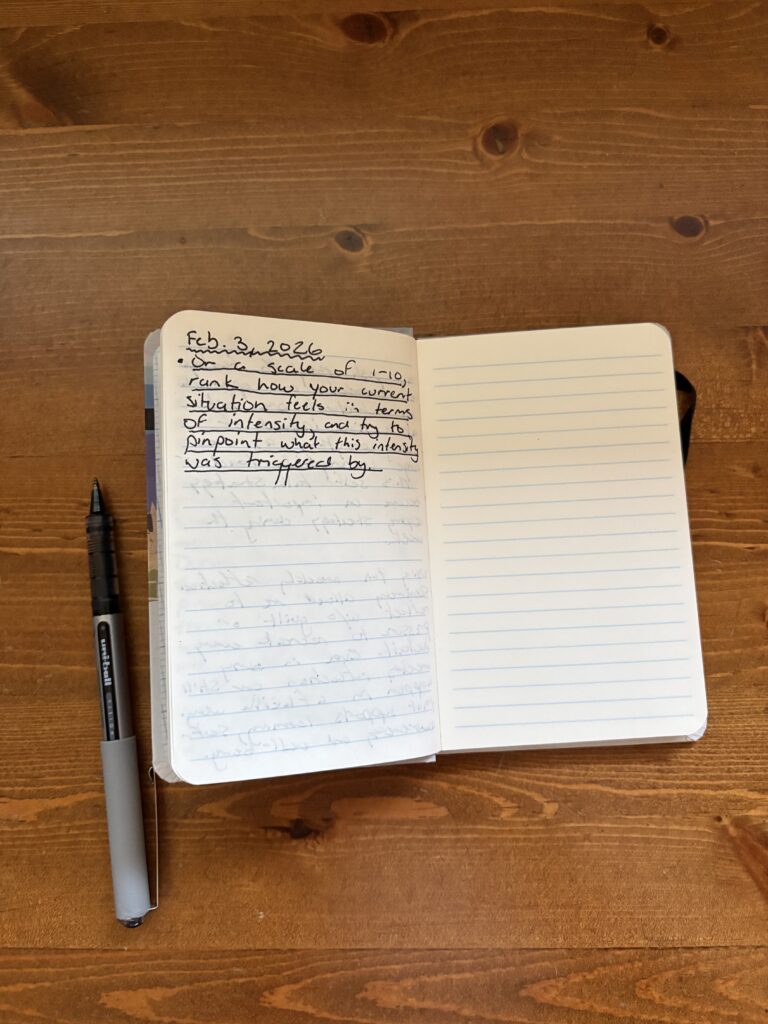
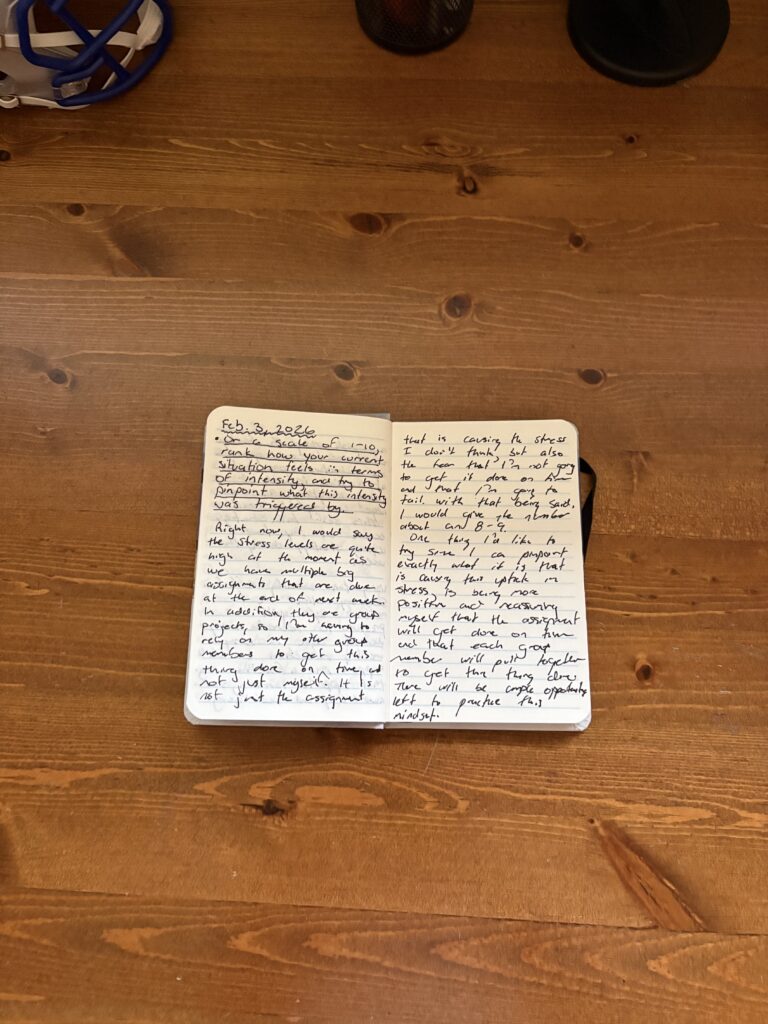
Before and after using prompt-based journaling
Sources:
Mahtani, N. (2024 September 26). 25 Writing Prompts to Help You Sort Through Your Feelings. https://www.wondermind.com/article/writing-prompts/
Decide Your Legacy. (2024). 100 Journaling Prompts for Self-Reflection. https://www.decideyourlegacy.com/blog/100-journaling-prompts-for-reflection-insight